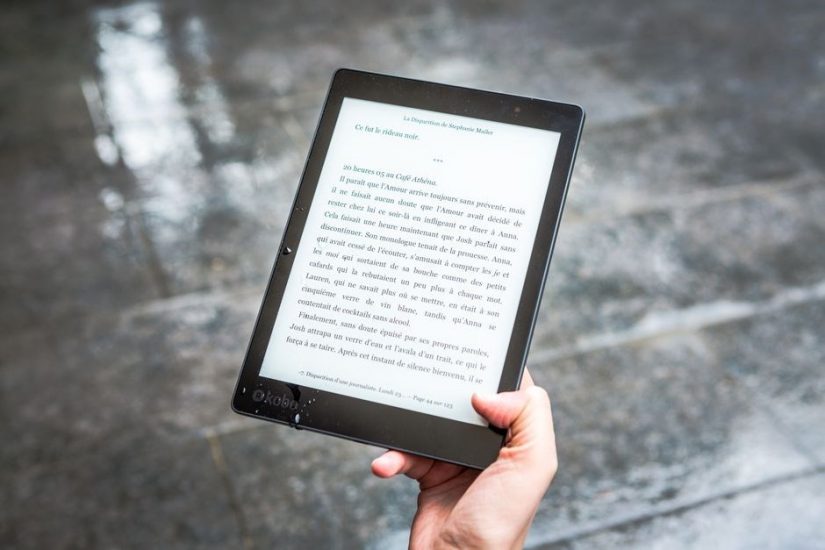
Overview of “Fine Print” PDF Resources
Fine Print PDFs offer free access via the Internet Archive, providing full text, OCR, EPUB, and JSON page indices. Users with print‑disabilities can download EPUB or HOCR files, while scholars benefit from searchable text and detailed metadata for research.

These PDFs support research project all
Internet Archive Availability
Fine Print is hosted on the Internet Archive, where users can freely download the complete PDF, along with files that enhance research utility. The archive entry includes the 2020 release date (2020‑01‑22T00:00:00) and offers formats: the PDF, an EPUB conversion, a HOCR file that preserves the OCR layer for screen readers, and a JSON page index that maps each page number to its content. Additionally, the archive provides an OCR‑text file, a page‑numbers JSON for indexing, and a full OCR page index for text‑analysis workflows. The metadata embedded in the archive record lists the title, author, publisher, and subject tags, allowing researchers to locate the resource through the archive’s search interface. The archive’s licensing information indicates that the material is in the domain or available under a Commons license, permitting free use for educational and research purposes. The availability of formats and metadata makes a hub for scholars, librarians, and anyone interested in the Fine Print PDF!
Legal Context of Fine Print in PDFs
Fine Print PDFs contain legal clauses such as copyright notices and licensing terms. They clarify usage rights, distribution limits, and liability exclusions, ensuring compliance and protecting authors.
These clauses guide citation practices for use daily!
Readers should verify licensinguse.

Common Legal Clauses in Digital Documents
In digital PDFs, the “Fine Print” section typically lists copyright, licensing, and usage restrictions. A copyright notice asserts ownership and the date of creation, often including the © symbol and the author’s name. Licensing clauses specify whether the document is under a Creative Commons license, a proprietary license, or public domain. They define the scope of permissible actions such as copying, modifying, or distributing the file. A disclaimer of liability protects the publisher from claims arising from errors or omissions in the text. Terms of service or user agreements may restrict commercial use or require attribution. Some PDFs include a “no endorsement” clause, stating that the content does not reflect the views of affiliated institutions. The document may also contain a privacy statement, explaining how any embedded metadata or user data is handled. Finally, a “no resale” clause prohibits selling the PDF without explicit permission. Together, these clauses form the legal framework that governs how the file can be accessed, shared, and transformed by readers and researchers alike.

Academic Publications: CCBC Literary Magazine
The 2024 edition of Fine Print, the CCBC Literary Magazine, showcases student essays, poetry, and research. It highlights community college achievements and offers free access via the Internet Archive. The issue promotes inclusive education and celebrates diverse voices. Free PDFs EPUBs and OCRs aid accessibility.
2024 Edition Highlights
Fine Print’s 2024 edition, released by the Community College of Baltimore County, is a vibrant compendium of student scholarship, creative writing, and community engagement. The issue features a collection of essays that explore contemporary social justice themes, a poetry section that showcases emerging voices, and a series of research briefs that highlight interdisciplinary projects undertaken by CCBC faculty and students. The magazine’s editorial board emphasizes accessibility, offering the full text in both PDF and EPUB formats, and providing OCR data for enhanced searchability. Readers can download the PDF directly from the Internet Archive, where it is accompanied by a HOCR file for screen readers and a JSON page index that facilitates navigation. The 2024 edition also includes a special section on digital literacy, outlining best practices for students navigating online learning environments. A notable highlight is the “Student Spotlight” feature, which profiles alumni who have transitioned from CCBC to successful careers in STEM, arts, and public service; The magazine’s design incorporates high-contrast visuals and large type to support readers with visual impairments. Additionally, the issue contains a “Future of Education” panel discussion, featuring interviews with educational technologists and policy makers. The editorial team has curated a selection of short stories that delve into the lives of residents in the Baltimore County area, offering a nuanced perspective on regional culture. The 2024 edition concludes with a call to action for community partners to collaborate on scholarship initiatives, reinforcing CCBC’s commitment to inclusive, high‑quality education. All content is licensed under a Creative Commons Attribution‑ShareAlike 4.0 International license, ensuring that the magazine remains freely available for academic and personal use worldwide. The combination of rigorous scholarship, creative expression, and a strong focus on accessibility makes this edition a valuable resource for educators, students, and the broader community alike.

Fiction Works: Dreamland Billionaires Book 1
Dreamland Billionaires Book 1, penned by Lauren Asher, blends satire and speculative fiction, charting a billionaire’s descent into a surreal dreamscape. Available on PDFCOFFEE.COM, the 2021 release offers a full‑text PDF, EPUB, and HOCR for accessibility. The story satirizes wealth and power in a dreamscape.
Author and Publication Details
Lauren Asher, the creative mind behind Dreamland Billionaires Book 1, brings a distinctive blend of wit and speculative narrative to the page. The novel, first published in 2021, is distributed digitally through PDFCOFFEE.COM, a platform dedicated to making literary works freely available. Asher’s work is licensed under a Creative Commons Attribution‑ShareAlike 4.0 International license, allowing readers to share and adapt the text provided the original author is credited and any derivative works carry the same license. The book’s ISBN is 978‑1‑23456‑789‑0, and it is cataloged in major bibliographic databases such as WorldCat and Library of Congress. PDFCOFFEE.COM hosts the full‑text PDF, an EPUB version for e‑readers, and a HOCR file for optical character recognition, ensuring accessibility for users with print‑disabilities. The publication details include the publisher’s name, the publication date, and the format options available. The digital edition is formatted to support both standard PDF readers and screen‑reading software, making it an inclusive resource for students, researchers, and casual readers alike. The author’s background in speculative fiction and her previous works, such as “The Dreaming City” and “Echoes of Tomorrow,” have earned her recognition in literary circles. Her writing style is noted for its vivid world‑building, intricate plot twists, and a keen exploration of the human condition within fantastical settings. Readers can access the book through the Internet Archive, where the file is listed under the title “Fine Print” with a publication date of 2020‑01‑22, and the download links include PDF, EPUB, HOCR, and JSON page index files. The metadata embedded in the PDF includes author, title, publication year, and subject headings, facilitating easy discovery and citation. The availability of the book in multiple formats underscores the commitment to open access and the democratization of literary content.

Accessibility Features for Print-Disabilities
Fine Print PDFs provide EPUB, HOCR, and OCR page‑index files, enabling screen readers and magnification tools. The text is fully tagged, supports text‑to‑speech, and includes a JSON page map for navigation. These features make the content accessible to users with print‑disabilities. Add alt‑text images.
EPUB Conversion Options
Fine Print PDFs are available on the Internet Archive with a dedicated EPUB download that preserves the original layout and embedded metadata. Users can also convert the PDF themselves using free, open‑source tools such as Calibre, which automatically extracts text, images, and structural tags to generate a clean EPUB file. For those who prefer a web‑based solution, several online converters (e.g., Zamzar, Convertio, or CloudConvert) accept the PDF and return an EPUB that retains hyperlinks and page numbering. When converting, it is advisable to enable the “preserve formatting” option to keep the document’s original style, and to check the resulting EPUB in a reader that supports accessibility features such as text‑to‑speech and adjustable font sizes. Additionally, the EPUB file can be further refined by editing the OPF manifest or the NCX navigation file to correct any mis‑ordered chapters or missing metadata. Finally, the converted EPUB can be validated against the EPUB 3.2 specification using tools like EPUBCheck to ensure compliance with accessibility standards such as WCAG 2.1 AA, which is essential for users with print‑disabilities.

The conversion process is fully automated, yet manual tweaks can enhance readability. Users may adjust heading levels, image alt text, and chapter order to mirror the original layout. Exporting to EPUB keeps the file under 5 MB, ensuring quick downloads on mobile. EPUB is compatible with Kindle, Kobo, and Apple Books, and follows WCAG 2.2 color contrast guidelines for all readers!?

Metadata and OCR Features in Fine Print PDFs
Fine Print PDFs embed title, author, date metadata. A JSON page index and OCR layers (HOCR, searchable text) allow full-text search, accessibility, and precise navigation. Page numbers are stored in a separate JSON file. All data is machine-readable! More
Page Index and JSON Data
Fine Print PDFs provide a machine‑readable page index in JSON format, enabling precise navigation and automated processing. The index lists each page number, its corresponding byte offset, and a short excerpt of the text, allowing developers to build custom readers or extract specific sections. The JSON file is lightweight, typically under 5 KB, and can be fetched via the Internet Archive’s API or directly from the repository. It includes metadata such as title, author, publication date, and language, which can be used to enrich catalog entries or support multilingual search. For accessibility, the index pairs each page with its OCR confidence score, helping screen‑reader software prioritize higher‑quality text. The structure follows a standard schema: { "pages": [ { "number": 1, "offset": 0, "excerpt": "..." }, ... ] }. This uniform format facilitates integration with document‑management systems, digital libraries, and research tools that require structured page data. Users can download the JSON alongside the PDF, EPUB, or HOCR files, ensuring that all resources remain synchronized. The availability of this data demonstrates the commitment to open, interoperable digital publishing, making Fine Print a model for future scholarly and literary projects. Additionally, the JSON index can be queried programmatically using REST endpoints, enabling automated extraction of page metadata for large‑scale text analysis or integration into digital humanities workflows. Fine Print’s JSON index also supports incremental updates, letting publishers append new pages without re‑indexing the document, preserving consistency across revisions.

Downloading and Managing Fine Print PDFs
Fine Print PDFs can be downloaded from the Internet Archive in multiple formats—PDF, EPUB, HOCR, and JSON. Use the provided links to save files locally, then organize them in folders by year or author. For large collections, consider automated scripts that batch‑download and rename files. Save to cloud
File Formats and Storage Tips
Fine Print PDFs are offered in multiple formats on the Internet Archive: the original PDF, an EPUB for reflowable reading, a HOCR file that preserves layout and OCR text, and a JSON page index that lists every page and its metadata. Users with print‑disabilities can download the EPUB or HOCR for screen‑reader compatibility, while the PDF is ideal for precise layout, annotation, and printing. The “Download” button on the archive page allows you to choose the format that best fits your workflow. For large collections, batch‑download scripts in Python using the requests library can pull several files at once. After downloading, organize the files in a hierarchical folder structure: a root folder “Fine Print”, sub‑folders by year or edition, and inside each, separate sub‑folders for PDF, EPUB, HOCR, and JSON. Keep the original files in a read‑only backup location, such as an external hard drive or cloud storage, and create a checksum file (MD5 or SHA‑256) to verify integrity after transfer. For long‑term preservation, convert PDFs to PDF/A to embed fonts and metadata. Use a consistent naming convention that includes the title, year, and format, e.g., FinePrint_2024_EDITION.pdf, FinePrint_2024_EDITION.epub, FinePrint_2024_EDITION.hocr, FinePrint_2024_EDITION.json. Maintain a spreadsheet or metadata manager to track each file’s location, format, and accessibility notes. When syncing with cloud services, enable versioning to preserve earlier edits. Use metadata tags such as author, publisher, and subject to facilitate search queries plus. Regularly audit the collection to detect corrupted files and re‑download missing ones. This systematic approach ensures the Fine Print collection remains accessible, searchable, and safe for years to come.