
GTW335ASNWW Washing Machine: A Comprehensive Guide
This guide provides detailed information for the GE GTW335ASNWW washing machine, including troubleshooting, diagnostic modes, and a service manual location for assistance.
Understanding the GTW335ASNWW Model
The GE GTW335ASNWW is a top-load washing machine designed for reliable, straightforward cleaning. Many users seek this model specifically as a budget-friendly option from trusted brands like GE, Maytag, and Whirlpool, prioritizing functionality over extensive features. It’s an electronic controls model, meaning operation relies on digital settings rather than purely mechanical ones.
Understanding its capabilities begins with recognizing its diagnostic features. GE washing machines possess a hidden diagnostic mode, invaluable for troubleshooting a wide range of issues, including problems with spinning or locking. Accessing this mode, often through a specific sequence of button presses, allows users to perform tests and interpret error codes, aiding in self-diagnosis before calling for service. A service manual (available online – see documentation location) provides detailed schematics and repair instructions.
This model’s simplicity doesn’t equate to a lack of support; comprehensive documentation exists to assist owners and technicians alike.
Key Features and Specifications

The GTW335ASNWW boasts a traditional top-load design, prioritizing ease of use and accessibility. While specific capacity details vary, it’s generally considered a standard-size machine suitable for family laundry needs. A key feature is its multiple wash cycles, catering to different fabric types and soil levels – a demonstration video details these options.
Water temperature settings are adjustable, allowing for customized cleaning based on garment care labels. The machine incorporates a durable washer drum, designed for long-term performance. Importantly, the GTW335ASNWW includes electronic controls, enabling precise cycle selection and option settings.

Troubleshooting is aided by a diagnostic mode, accessible for identifying potential issues. The model’s specifications are readily available in the service manual, providing detailed technical information for both users and repair professionals.
Initial Setup and Installation
Before operating your GTW335ASNWW, ensure a level installation surface to minimize vibration and noise. Carefully remove all shipping materials, including any bolts securing the drum – consult the service manual for specifics. Connect the water inlet hoses, verifying secure connections to prevent leaks.
Proper electrical grounding is crucial for safety; use a dedicated, properly grounded outlet. Once connected, run an initial empty cycle to flush out any manufacturing residue. Double-check the detergent dispenser is correctly installed and functioning.
Review the complete installation instructions within the provided documentation to guarantee optimal performance and longevity of your new washing machine. A correctly installed machine will operate efficiently and reliably.
Control Panel Overview
The GTW335ASNWW features an intuitive control panel designed for ease of use. Cycle selections are prominently displayed, allowing for quick program choices like Normal, Delicates, and Heavy Duty. Option settings, such as water temperature and spin speed, are easily adjustable via dedicated buttons.
A digital display clearly indicates the selected cycle, remaining time, and any active error codes; Familiarize yourself with the power button for starting and pausing cycles. The control panel also incorporates features for customizing wash preferences, ensuring optimal cleaning results for various fabric types.

Refer to the detailed cycle selection guide for a comprehensive understanding of each program’s specific settings and recommended uses.
Cycle Selection Guide
The GTW335ASNWW offers a variety of cycles to cater to diverse laundry needs. The Normal cycle is ideal for everyday cottons and linens, providing a balanced wash and rinse. Delicates offers a gentle wash for fragile items like lingerie and silk. For heavily soiled clothes, the Heavy Duty cycle delivers a powerful cleaning action.
Quick Wash provides a faster cycle for lightly soiled items, while Permanent Press minimizes wrinkles. A Bulky Items/Sheets cycle accommodates larger loads, and a Whites cycle utilizes hotter water for brightening. Understanding each cycle’s purpose ensures optimal cleaning and fabric care. Always consult the garment’s care label before selecting a cycle.
Option Settings Explained
The GTW335ASNWW features several option settings to customize your wash. Water Temperature allows selection between hot, warm, and cold, impacting cleaning and color retention. Spin Speed controls the final spin intensity, with higher speeds extracting more water but potentially causing more wrinkles. The Rinse Option provides an extra rinse cycle for sensitive skin or heavily soiled loads.
Soil Level adjusts the wash time and agitation based on soil intensity. A Delay Start function allows scheduling washes for convenience. Understanding these options enables tailoring each wash to specific laundry requirements, optimizing cleaning performance and fabric care. Experimenting with these settings can significantly improve your laundry results.

Using the Washing Machine
Operating the GTW335ASNWW is straightforward. Begin by sorting laundry and loading it loosely into the drum, avoiding overloading. Next, add detergent according to the dispenser instructions and select the appropriate cycle based on fabric type and soil level. Choose desired option settings like water temperature and spin speed.

Press the start button to initiate the wash cycle. Throughout the process, the control panel displays cycle status. Once complete, carefully unload the laundry. Familiarizing yourself with the cycle selection and option settings ensures optimal cleaning and fabric care. Refer to the detailed cycle guide for specific recommendations.
Loading and Unloading Laundry
Proper loading maximizes cleaning efficiency and prevents damage. Distribute items loosely within the washer drum; avoid tightly packed loads. Do not overload – leave sufficient space for clothes to move freely during the wash cycle. Ensure small items are secured in a mesh laundry bag to prevent them from getting lodged in the machine.
After the cycle finishes, carefully remove laundry, checking for any remaining items. Be mindful of water potentially remaining in the drum. Promptly unloading prevents mildew and odors. Regularly inspect pockets for objects before loading to avoid damage to the washer or clothing.
Detergent Dispenser Instructions
The GTW335ASNWW features a dispenser for detergent, fabric softener, and bleach. Locate the dispenser drawer, typically on the top of the machine. Fill each compartment according to the detergent/additive manufacturer’s instructions – avoid overfilling. Use only HE (High Efficiency) detergent, as standard detergents create excessive suds.
The detergent compartment is usually marked with a “II” or a detergent symbol. Fabric softener goes in the compartment marked with a fabric softener symbol, and bleach in the bleach symbol compartment. Ensure the dispenser drawer closes completely. Regularly clean the dispenser to prevent clogs and residue buildup, maintaining optimal performance.
Water Temperature Settings
The GTW335ASNWW offers a range of water temperature options to suit various fabric types and cleaning needs. These typically include Hot, Warm, and Cold settings, selectable via the control panel. Hot water is best for whites and heavily soiled items, while warm water is suitable for most everyday laundry. Cold water is ideal for delicates, bright colors, and to prevent fading or shrinking.
Selecting the appropriate temperature ensures effective cleaning while protecting your garments. Some cycles may automatically limit temperature options for optimal results. Always check garment care labels before selecting a water temperature. Utilizing colder water also conserves energy and is environmentally friendly.
Troubleshooting Common Issues
Encountering problems with your GTW335ASNWW washing machine can be frustrating, but many issues are easily resolved. Common concerns include the washer failing to start, not spinning, or not draining properly. Before contacting service, check basic connections – power supply and water hoses. A frequently cited issue involves the lid switch; ensuring it’s properly engaged is crucial for operation.
The motor capacitor and drive belt are also potential culprits for spin or start failures. Utilizing the diagnostic mode (detailed elsewhere in this guide) can help pinpoint the exact cause. Online resources and the service manual offer further guidance for self-diagnosis and repair. Remember safety first – disconnect power before any inspection!

Washer Won’t Start
If your GTW335ASNWW washing machine isn’t starting, several factors could be at play. First, verify the power cord is securely plugged into a functioning outlet. Check your home’s circuit breaker or fuse box to ensure the circuit hasn’t tripped or blown. A common issue is a faulty lid switch – the washer won’t start unless the lid is completely closed and the switch engaged.
Testing the lid switch with a multimeter (refer to the service manual for instructions) can confirm its functionality. Additionally, explore the diagnostic mode to check for error codes indicating the problem. A malfunctioning motor capacitor or a problem with the motor itself could also prevent startup. Always disconnect power before attempting any internal checks or repairs.

Washer Won’t Spin
A GTW335ASNWW that won’t spin can stem from several issues. Begin by ensuring the washer isn’t overloaded, as this can strain the motor. A frequently cited cause is a broken or worn motor drive belt; inspect it for damage or looseness. The lid switch is crucial – if it doesn’t register the lid is closed, the washer won’t spin for safety reasons. Test the switch using a multimeter, consulting the service manual for proper procedure.
Enter the diagnostic mode to identify any error codes related to the motor or drive system. A failing motor capacitor can also prevent spinning. If the washer does agitate but won’t spin, the issue likely lies within the spin cycle components. Remember to disconnect power before any inspection or repair attempts.
Washer Won’t Drain
If your GTW335ASNWW isn’t draining, several possibilities exist. First, check the drain hose for kinks or obstructions – ensure it isn’t clogged or positioned too high. A common culprit is a blocked drain pump filter; locate and carefully clean it, as debris often accumulates there. Accessing this filter may require removing a lower access panel.
Utilize the diagnostic mode to check for error codes specifically related to the drain pump. A faulty drain pump itself could be the issue, requiring replacement. Inspect the pump for any visible damage or obstructions. Before attempting repairs, disconnect the power supply. The service manual provides detailed instructions for accessing and testing the drain pump. Ensure proper reassembly to prevent leaks.
Diagnostic Mode and Error Codes
The GE GTW335ASNWW features a hidden diagnostic mode, a powerful tool for troubleshooting. Entering this mode allows you to run self-tests and interpret error codes, pinpointing the source of issues like spinning or draining problems. Accessing diagnostic mode typically involves a specific sequence of button presses on the control panel – consult the service manual for the exact procedure.
Error codes displayed on the machine provide clues about the malfunction. These codes, detailed in the service manual and diagnostic papers, correspond to specific components or issues. Understanding these codes eliminates guesswork and streamlines the repair process. Common codes relate to the lid switch, motor, or water inlet valve. Always refer to the manual for accurate interpretations and recommended solutions.
Entering Diagnostic Mode
To initiate the diagnostic mode on your GE GTW335ASNWW washing machine, a specific sequence of actions is required; Begin by ensuring the washer is empty and the power is on. Typically, this involves pressing and holding a combination of buttons on the control panel – often the ‘Spin Speed’ and ‘Rinse’ buttons simultaneously.
Continue holding these buttons for approximately three to five seconds until the display illuminates and enters a diagnostic test state. The exact button combination may vary, so referencing the detailed tech sheet or service manual (available online – see provided link) is crucial for accurate instructions. Once in diagnostic mode, the washer will cycle through various tests, displaying codes to indicate component functionality.
Interpreting Error Codes
When the GTW335ASNWW displays an error code during diagnostic mode or normal operation, it signals a specific issue within the washing machine’s system. These codes are the washer’s way of pinpointing the source of the problem, aiding in efficient troubleshooting. Common codes relate to issues like lid switch malfunctions, motor failures, or drainage problems.
A comprehensive list of error codes and their corresponding meanings can be found in the service manual (linked previously). For example, a specific code might indicate a faulty water inlet valve, while another could point to a problem with the drive motor. Always consult the manual for accurate interpretations, as codes can vary. Understanding these codes empowers users to address issues promptly or inform a technician effectively.
Maintenance and Cleaning
Regular maintenance is crucial for extending the lifespan and maintaining the performance of your GTW335ASNWW washing machine. This includes periodic cleaning of key components to prevent buildup and ensure optimal operation. A vital step is cleaning the detergent dispenser, removing any residue that can clog the system and affect wash cycles. The washer drum should also be cleaned regularly to eliminate mold and mildew, preserving fabric freshness.
Furthermore, the filter requires routine cleaning to prevent lint and debris from accumulating, which can hinder drainage. Following the detailed filter cleaning procedures outlined in the service manual will ensure proper water flow. Consistent cleaning practices contribute to a more efficient and hygienic laundry experience, safeguarding your investment.
Cleaning the Detergent Dispenser
To maintain optimal washing performance, regularly clean the detergent dispenser of your GTW335ASNWW. Over time, detergent and fabric softener can build up, causing clogs and hindering proper dispensing. Begin by removing the dispenser drawer – typically, a release button or latch allows for easy removal. Rinse the drawer thoroughly under warm water, using a mild detergent to dissolve any hardened residue.
Pay close attention to the individual compartments, ensuring all traces of detergent and softener are eliminated. For stubborn buildup, a small brush can be helpful. Once clean, rinse again and allow the drawer to air dry completely before reinserting it into the washing machine. This simple maintenance step ensures efficient and effective laundry cycles.
Cleaning the Washer Drum
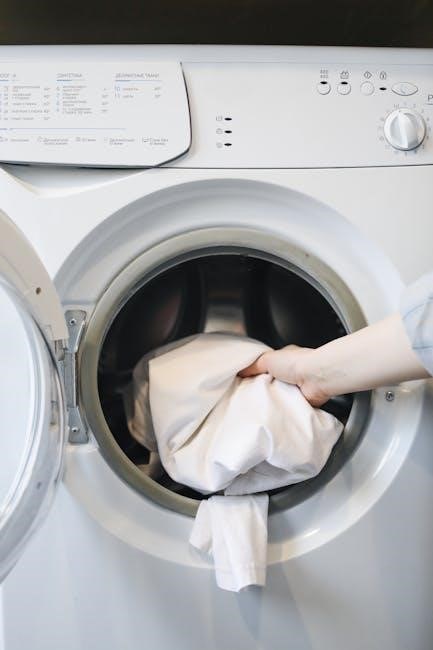
Maintaining a clean washer drum is crucial for preventing odors and ensuring effective cleaning performance with your GTW335ASNWW. Regularly run a cleaning cycle using a washing machine cleaner, following the product’s instructions. Alternatively, you can use hot water and a cup of white vinegar. Ensure the drum is empty before initiating the cleaning cycle.
For a more thorough clean, wipe down the interior of the drum with a damp cloth, paying attention to any areas with visible residue. Avoid using abrasive cleaners, as they can damage the drum’s surface. After cleaning, leave the washer door ajar to allow for proper ventilation and prevent mildew growth. Consistent drum cleaning contributes to a fresher, more hygienic laundry experience.
Filter Cleaning Procedures
Regularly cleaning the filter in your GTW335ASNWW washing machine is essential for optimal performance and preventing drainage issues. The filter location varies, but typically it’s found at the front of the machine, behind a small access panel at the base. Before starting, ensure the washer is unplugged for safety.
Place a shallow pan or towels beneath the access panel to catch any water that may spill. Carefully open the panel and unscrew the filter cap, turning it counterclockwise. Remove the filter and clean it thoroughly under running water, removing lint, debris, and small objects. Inspect the filter housing for any obstructions and clear them. Reinstall the filter securely, ensuring a watertight seal, and close the access panel.
Safety Precautions
Prioritizing safety when operating your GE GTW335ASNWW washing machine is paramount. Always ensure the machine is properly grounded to prevent electrical shock. Never attempt to repair the washer yourself unless you are a qualified technician; improper repairs can be hazardous.
Keep children and pets away from the washing machine during operation. Do not overload the washer, as this can cause instability and potential damage. Avoid contact with water during operation to minimize electrical risks. Unplug the machine before cleaning or performing any maintenance. Never use flammable liquids near the washer. If you detect a gas leak, immediately ventilate the area and contact your gas company.
Parts Replacement Guide
Replacing worn or damaged parts on your GE GTW335ASNWW washing machine can restore its functionality. Common replacements include the lid switch, crucial for initiating the spin cycle, and the motor drive belt, essential for transferring power to the drum. Before any replacement, always disconnect the power supply.
A faulty lid switch prevents the washer from spinning; testing and replacing it is often a first step in troubleshooting. A worn motor drive belt will cause a lack of drum rotation. Replacement procedures require basic tools and careful attention to detail. Refer to the service manual (available online – see documentation location) for detailed diagrams and instructions. Ensure compatibility of replacement parts with the GTW335ASNWW model number.
Lid Switch Replacement
A malfunctioning lid switch is a frequent cause of a GE GTW335ASNWW washer failing to spin. Before starting, disconnect the power! Locate the lid switch assembly, typically under the washer’s cabinet, accessible after removing the control panel or rear access panel. Disconnect the electrical connector to the old switch.
Remove the mounting screws securing the switch and carefully detach it. Install the new lid switch, ensuring proper alignment and secure fastening. Reconnect the electrical connector. Test the switch’s functionality by manually activating it and verifying it allows the washer to proceed to the spin cycle. Reassemble the washer’s panels. A properly functioning lid switch is vital for safe operation.
Motor Drive Belt Replacement
If your GTW335ASNWW isn’t agitating or spinning, a worn or broken motor drive belt is a likely culprit. Always disconnect power before beginning! Access the belt by removing the rear access panel of the washing machine. Note the belt’s routing around the motor pulley and the transmission.
Loosen the motor mounting bolts to create slack, allowing removal of the old belt. Install the new belt, ensuring it’s correctly seated in the grooves of both pulleys. Tighten the motor mounting bolts, maintaining proper belt tension – not too tight, not too loose. Reattach the rear access panel. A correctly installed belt ensures efficient power transfer for washing and spinning cycles.
Service Manual Location
Accessing the service manual for your GTW335ASNWW washing machine is crucial for in-depth repairs and diagnostics. A readily available resource, the manual provides detailed schematics, parts lists, and troubleshooting procedures beyond the standard user guide.
Fortunately, a service manual for a closely related model, the GTW460ASJ8WW, is publicly accessible online at JustAnswer. While not specifically for the GTW335ASNWW, it shares significant component similarities and repair procedures. Searching online using the model number and “service manual” will also yield potential results from appliance repair websites and forums.